Look before you Leap
When most people start a business, they simply follow the standard model. Many years ago, I heard an Australian dentist—Paddy Wahl, if I remember correctly—describe how he worked just three days a week alongside four hygienists. He looked delighted with his setup and said what a great life it gave him. I didn’t believe him at the time. I should have.
This is the first in a series of videos on building a dental business. They may resonate with you and hopefully spark new ideas. They’re a great starting point for thinking differently about how you work.
When most people start a business, they simply follow the standard model. Many years ago, I heard an Australian dentist—Paddy Wall, if I remember correctly—describe how he worked just three days a week alongside four hygienists. He looked delighted with his setup and said what a great life it gave him. I didn’t believe him at the time. I should have.
This is the first in a series of videos on building a dental business. They may resonate with you and hopefully spark new ideas. They’re a great starting point for thinking differently about how you work.
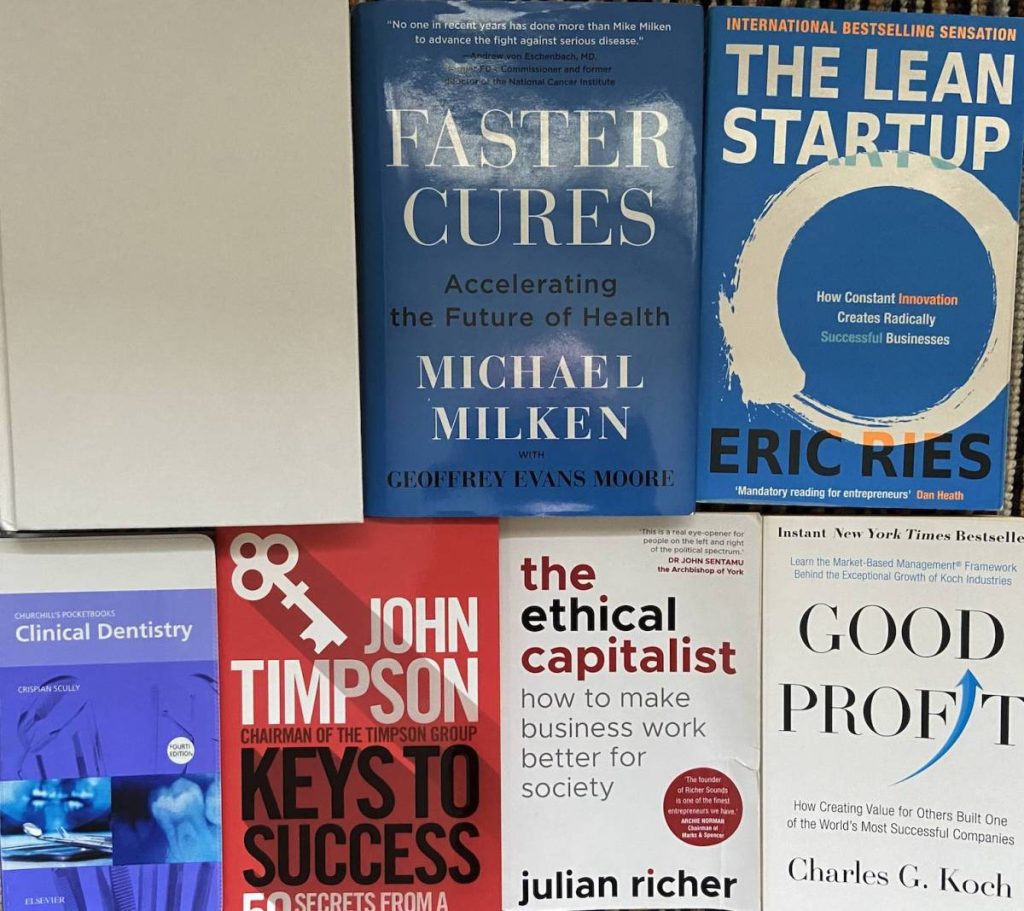
On page 368 of Walter Isaacson’s biography on Steve Jobs (the white one) it highlights he didn’t just sell gadgets — he reinvented retail. He dreamed up sleek, minimalist stores where people could experience Apple products, not just buy them. No pushy staff, no jargon, just clarity, design and simplicity. The stores gave Apple direct control over the customer experience and helped build a cult-like brand loyalty. This bold vision turned business-as-usual on its head — and made shopping feel like discovery, not a chore.
Like Paddy Wahl, we may be able to develop a health service despite the lip service governments spends on oral health, and we can sell a service that the public trust and happy to pay monthly for the price of a coffee. Now that’s a habit we never had in the 80’s.
We can be the main Health Advocates against a “war on sugar”, which causes health issues far worse than any dental extraction.
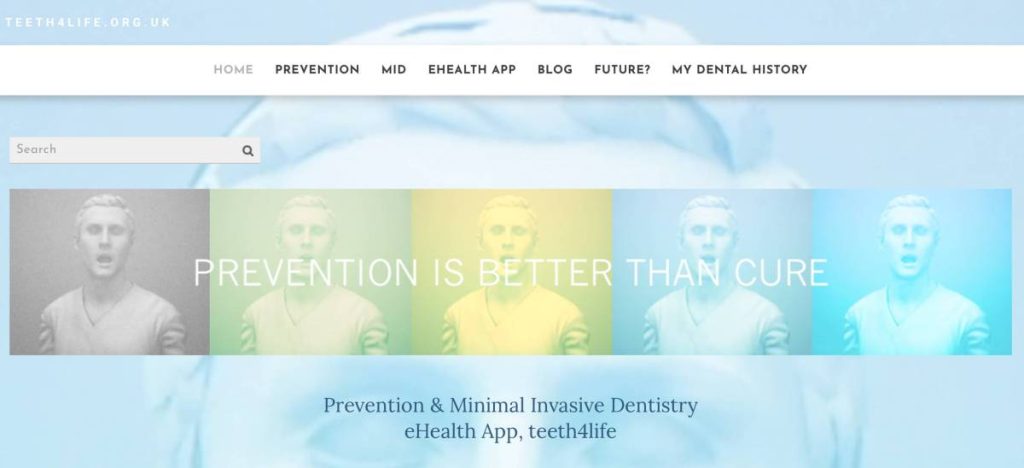
This content was created before I retired and is now a little out of date. That said, dentistry hasn’t changed much in the last few decades. Click the image to access the site.
You’ll find a three-hour talk—mainly on MID and prevention—with timestamps to make navigation easier. It was rather cruel to expect FDs to listen to me for that long; Covid was challenging enough.
When time allows, I’ll update it. Very little in dentistry will change, but advances in AI—such as “dictate” —could remove my repetition and errors, probably cutting the talk down by an hour.
The following provides a starting point for developing an SOP for mobile dental care delivery. With feedback from those already experienced in the field, we can refine this into an efficient, practical system that works for care homes, their residents, and anyone who is housebound.
DHS Standard Operating Procedure (SOP)
Mobile Dental Therapist Service for UK Care
Homes
1. Purpose
To provide a compliant, safe, and effective operational framework for UK■qualified Dental
Therapists delivering mobile dental care and teledentistry services to care homes. This SOP
supports prevention■led dentistry, digital workflows, and remote clinical oversight while ensuring
compliance with GDC, CQC, GDPR, and indemnity requirements.
2. Scope
Applies to Dental Therapists, supporting Dental Nurses, digital coordinators, and care home teams.
Covers synchronous and asynchronous examinations, mobile visits, digital scanning, radiographic
data transfer, preventive care, and escalation protocols.
3. Professional Requirements
All clinicians must hold active GDC registration, enhanced DBS clearance, evidence of CPD
compliance, indemnity (UK), and training in safeguarding, cross infection control, dementia
awareness, teledentistry, and digital workflows.
4. Consent
Obtain valid consent (written or recorded verbal) prior to assessment or treatment. For patients
lacking capacity, follow the Mental Capacity Act with best■interest decision making. Document all
consent clearly. Photographs, scans, and video require separate consent for clinical and
educational use.
5. GDPR & Data Security
All digital records must be encrypted and stored on GDPR■compliant platforms. Images and scans
must not remain on personal devices. Access must be restricted to authorised personnel. Data
transfers must use secure upload links. Retention follows NHS dental record standards (minimum
2–11 years).
6. Cross Infection Control
Follow HTM 01■05 guidance. Use single■use barriers, appropriate PPE, hand hygiene protocols,
equipment disinfection between visits, and safe transport of instruments. Mobile kits must include
sterilised instruments, sharps disposal, water supply, and surface disinfectants.
7. Clinical Workflow for Mobile Visits
• Pre■visit triage using photos/scans.
• Confirm medical history and safeguarding status.• Perform visual assessment, periodontal screening, and preventive planning.
• Provide fluoride, SDF (where appropriate), oral hygiene instruction, and non■AGP procedures.
• Escalate to supervising dentist if findings require diagnosis outside therapist scope.
• Upload records to digital platform the same day.
8. Teledentistry Workflow
Synchronous (live): identity confirmation, consent check, remote camera guidance, documentation,
triage.
Asynchronous (store■and■forward): therapist collects scans/photos; dentist reviews remotely;
treatment plan created and returned securely.
9. Indemnity
Clinicians must maintain personal indemnity covering mobile services, teledentistry, and work in
care homes. The franchise■style model requires each provider to assume responsibility for their
own clinical actions.
10. CQC Compliance
If operating independently, therapists must work under an organisation with a CQC registration for
regulated dental services. Mobile units must comply with safety, record■keeping, staffing, and
safeguarding standards.
11. International Alignment (Australia, USA, Canada)
Australia: mobile oral health allowed with strict infection■control, telehealth billing, and local
licensing.
USA: state■dependent teledentistry laws; therapists expanded in Minnesota/Alaska.
Canada: strong remote■care models; digital consent and secure storage mandated.
This SOP aligns with best global practices supporting portable dentistry and digital■first preventive
care.
12. Equipment Requirements
Digital scanner, mobile dental kit, non■AGP instruments, portable lighting, PPE, disinfectants,
secure tablet/phone, encrypted upload software, and optional portable X■ray with training.
13. Quality Assurance
Quarterly audits, peer review, CPD logs, incident reporting, and outcomes monitoring. Regular
calibration sessions with supervising dentists.
14. Responsibilities
Therapist: clinical care, documentation, infection control.
DCP/Nurse: support, imaging, scanning, safeguarding.
Care Home Team: patient preparation, communication, follow■up.
Dentist (remote): diagnosis and treatment planning where required.
15. Review Cycle
Review annually or after regulatory changes. Updates should reflect advances in AI diagnostics,
scanning workflows, and preventive protocols.